
Knox County's Arrest Log Sources
One official source anchors any multi-day search. The Knox County Detention Center's official Recent Arrests endpoint is the only county URL that supports a booking history beyond a single day. How far back it reaches is unclear. The jail's page might hold a week of bookings, a month, or only the newest rows. The Knox County Sheriff's Office site adds nothing deeper. It publishes no weekly PDF, no daily bulletin archive, and no separate police blotter. So the jail endpoint stays the primary channel. Local reporting acts as a second, event-driven layer. If the live jail page shows pagination or older rows, note the oldest booking date you can see. A short list should never be presented as a county archive.
Reading the Knox County Blotter
A careful log check keeps each source and date separate instead of blending jail rows with news reports and copied records. Always work backward from the official source.
- Open the official Recent Arrests endpoint and record the page's own timestamp, if one is shown.
- Look for pagination, date filters, or older rows and write down the oldest visible booking date.
- Match the full name, booking date, booking number when available, arresting agency, and booking facility.
- Use the official inmate roster only to test present Knox County Detention Center custody.
- Read local reports as selected event coverage and follow their agency attribution back to the sheriff, police department, jail, or court.
- Request an older booking or arrest record from the responsible custodian when it has rolled off the public page.
For today only, use the 24 Hour Arrests guide. The wider log then covers older rows, delayed reports, and the path to retained Knox County records.
Fields in a Knox Arrest Entry
The live Knox page's exact fields are not listed. Kentucky's Daily Record of Arrests schedule suggests what a booking entry may hold. The website may show fewer.
| Entry field | What it can establish |
|---|---|
| Full name | A search identifier that still needs another field to separate similar people. |
| Booking number | A key for requesting the specific jail record when shown. |
| Arrest or admission time | The reported event or intake time; these are not always the same moment. |
| Officer or agency | The body that made or reported the arrest, not necessarily the record custodian. |
| Charge or offense | The charge recorded at booking, subject to later court action. |
| Bond or status | A snapshot that should be checked against current jail and court information. |
| Photograph | Not guaranteed on Knox County's current public page; verify the live display or request route. |
Note: Preserve the source date because a news story, jail row, and court event may carry different timestamps.
Weekend Knox County Reporting
No Knox agency publishes a set weekend or holiday update schedule. Bookings continue around the clock. Web posting, staff confirmation, court entry, and newsroom publication each run on a different clock. Monday's burst of stories may just be catch-up. It rarely signals a real rise in arrests. A quiet news weekend says little about jail bookings. Rely on booking dates, not article dates. If the jail endpoint is down, save the time you tried and call the jailer. For a named-person lookup across custody, booking, and court stages, the Knox County records hub explains the official channel for each. The ClayCoNews enforcement report shows the event-driven format typical of Knox Sheriff material.
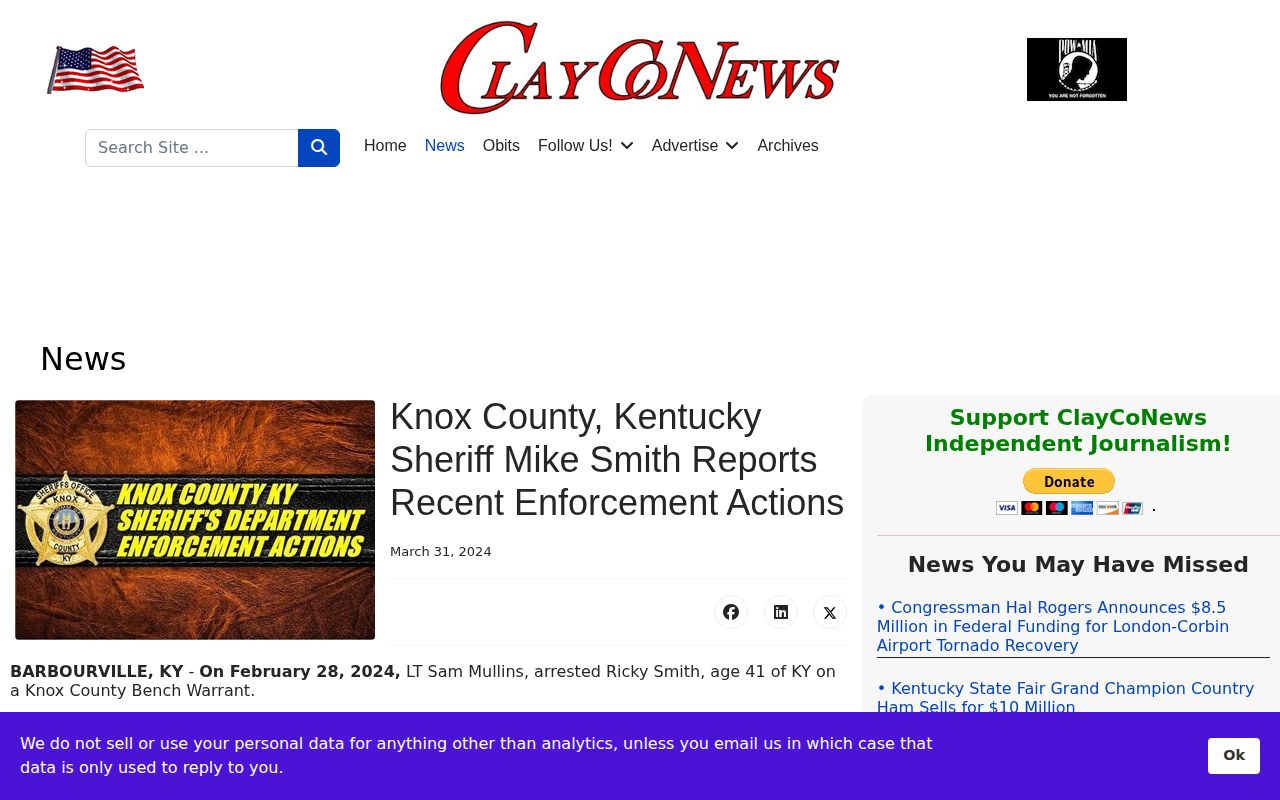
That news item is a supplemental example, not a complete official log or a current-custody result for anyone arrested in Knox County.
Knox Arrest Archives and Retention
Online visibility and legal retention are two different things. Kentucky's Local Government General schedule defines L4673, the Daily Record (List) of Arrests, as an adult arrest series built from booking and jail information. It lists possible identifying and arrest fields. It sets no fixed number of days Knox must publish the list online. The series is destroyed once it is no longer needed under the approved schedule.
A second classification covers inmates. The County Jailer schedule describes L2751, the Inmate Record File, as a cumulative file holding admission and release forms, photographs, incident reports, court papers, and other custody material. Its listed retention is five years after release. A mug-photograph classification, L4672, is kept far longer. Retention still does not guarantee web access.
Which series governs a specific Knox item is a question for the record custodian. Start with the jailer for booking and inmate material. The sheriff or arresting police agency holds the arrest or incident record. The circuit or district clerk keeps the court case. Ask by full name, approximate date, and booking or case number, and the Kentucky Department for Libraries and Archives schedules page identifies the official retention resources.
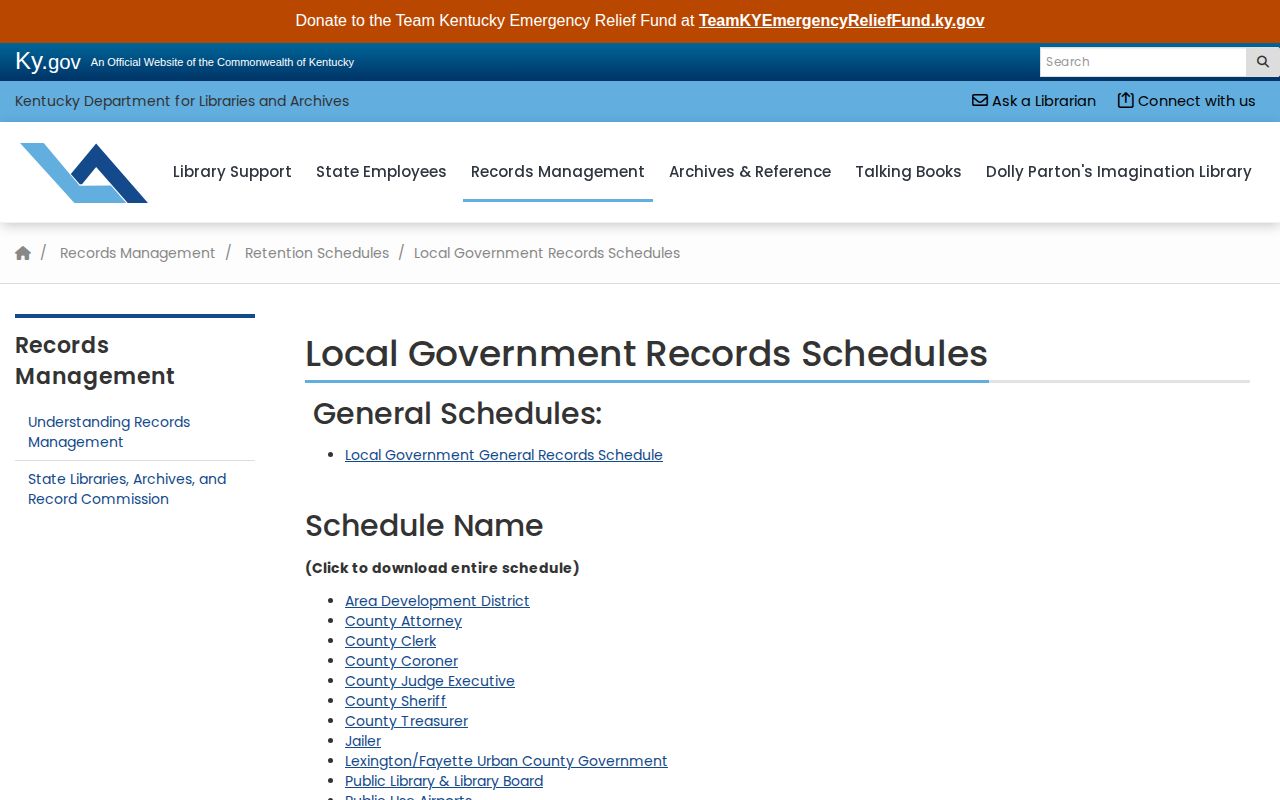
That state source explains schedules, not names. It is not a searchable Knox County arrest archive. Some files outlive the local office. For those, the Kentucky Department for Libraries and Archives offers an Order Records route. KDLA cautions that the State Archives is not a personal-name index. It is rarely the right first stop. Begin with the Knox custodian or clerk, ask whether a file was stored off-site or transferred, and go to the state archive only once the responsible collection is identified.
Knox County News Blotter Pattern
Knox County arrest coverage lives across many outlets. No single newsroom keeps a complete blotter. ClayCoNews republishes some sheriff enforcement releases, and the News Journal covers selected Knox and Barbourville events. WYMT, WNKY, Mountain Advocate, The Times-Tribune, and WRIL/The Big 106.3 add regional reports when a case stands out. A story can name the arresting agency. It may also cite a reported charge, booking facility, or later court event. It cannot show everyone booked over the same span. Photos vary too, from detention-center images to agency photos to generic art, so check the caption before trusting a source. The News Journal's Knox-area report shows the pattern.

A news article can give you the timeline. The Knox County jail and the courts still decide who is actually in custody. Think of the paper as dated context, nothing more.
Unofficial archive pages sometimes reach back years beyond what the jail displays online. That depth helps you pin down an arrest date. It can also hurt you. Copied charge text, custody status, and booking photos may sit there long after the facts changed, so the Knox County jail, the arresting agency, and the clerk of court come first. This page links no commercial arrest aggregator and treats none of their filters as a public record.
Agency Releases Versus Arrest Records
An enforcement release is built around an event. A Knox County jail log is built around intake. A court docket is built around cases. When a press story, a booking roster, and a docket describe the same arrest, keep the three formats straight, because each one answers a different question about who was arrested and what happened next.
Start with dates. Write down when the article ran and the arrest date it reports. Then find the agency named in the story and the facility that did the booking. From there, ask the jailer for the booking record. Ask the agency for the arrest or incident record. Ask the clerk for the docket. That simple habit keeps a later court event from getting tangled up with the original charge.
Corbin needs one extra step. The city spills across county lines. A Corbin dateline does not prove a Knox County booking. Find the facility named in the report. If the booking destination is unclear, call Corbin Police on its non-emergency line. Barbourville posts no city daily blotter either. So the county jail and agency records control there too.
Dates in an enforcement release can cover several operations at once. Do not sort people into a daily count unless the source spells out the event dates. Group announcements often appear after a weekend or holiday. The timing only reflects when the agency or newsroom hit publish. It does not reflect when each person was booked. A solid archive note records what you could actually see. List the source URL, the access time, and the oldest date shown. Note whether the page offered another page or filter. The note promises nothing about how long that span stays up. If the official interface changes later, those details help. They let you tell the Knox County custodian exactly which arrest record you need.